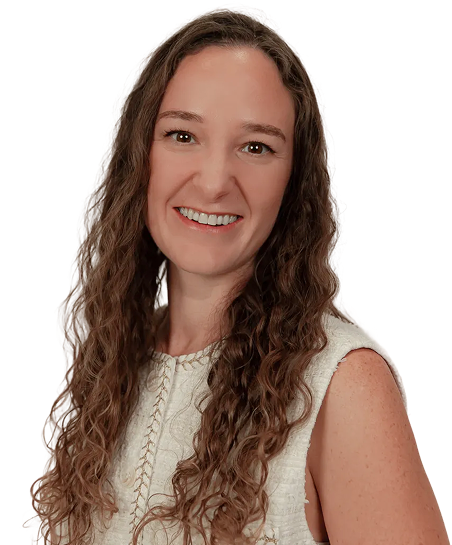
 When a loved one can no longer safely manage daily decisions, families are often left navigating urgent medical, financial, and legal concerns at once. Allie Castellano helps Sarasota families through the Florida guardianship process with clarity and guidance at every stage.
Florida guardianship filings are rising. In fiscal year 2023–24, Florida courts received 9,269 guardianship filings, a 34% increase over the prior decade. Sarasota County also has 408 active professional guardianship cases, the fifth-highest number in the state.
The local need is not surprising. Sarasota County has a large senior population, with roughly 38% of residents age 65 or older. Financial exploitation is also a growing concern. The FBI IC3 reported $388 million in losses to Florida seniors from internet-enabled fraud alone in 2024.
Guardianship is not a simple family authorization. It is a court process that can remove legal rights from the proposed ward and give decision-making authority to a guardian. Florida law prefers less restrictive options when available, such as a valid durable power of attorney or a healthcare surrogate signed while the person still had capacity.
When those documents do not exist, do not work, or are being challenged, Florida Statutes Chapter 744provides the guardianship framework. For Sarasota families, that usually means getting legal guidance before filing so the petition matches the person’s actual needs.
When Florida Families Need Guardianship
Guardianship may be needed when a person cannot safely manage personal, medical, financial, or residential decisions and no less restrictive option is available.
Common situations include:
- Cognitive decline, a parent with progressing dementia who no longer manages medication, finances, or housing safely
- Sudden incapacity, a stroke, traumatic brain injury, or serious medical event that leaves a family member unable to direct her own care
- Financial exploitation, discovery that a relative, caregiver, or third party has been moving the family member’s money against her interest
- Adult with developmental disability, a child reaching age 18 who needs continued substitute decision-making (often handled through guardian advocacy under Fla. Stat. §393.12, which is a less restrictive alternative)
- Disputed advance-directive interpretation, when a healthcare surrogate’s authority is being challenged or unclear
Before filing, the family should identify what alternatives already exist. A power of attorney, healthcare surrogate, supported decision-making plan, or Social Security representative payee may reduce or avoid the need for full guardianship. If those tools do not solve the problem, the petition should explain why.
Types of Guardianship Under Florida Statute Chapter 744
Florida guardianship is not one-size-fits-all. The court should remove only the rights that need to be removed.
- In plenary guardianship, the guardian holds all delegable rights of the ward. Imposed where the court finds the ward lacks capacity in all relevant areas.
- In limited guardianship, the guardian holds only the specific delegable rights identified by the court. Florida courts prefer limited guardianship over plenary when the ward retains capacity in some areas.
- Voluntary guardianship, an adult with capacity voluntarily delegates decision-making to a guardian, typically because of physical limitation rather than incapacity.
- Emergency temporary guardianship (§744.3031), short-term order, available without full notice in qualifying circumstances, when imminent danger or significant injury to the proposed ward exists. Limited to 90 days, extendable once for an additional 90 days.
- Guardian advocacy (§393.12), for individuals with developmental disabilities. Less restrictive than full guardianship; preserves more of the individual’s rights.
The petition specifies which type is sought. Courts often grant limited rather than plenary guardianship as the less-restrictive default, even when the petition asks for plenary.
The Capacity Determination. Examining Committee and Court
Before any guardianship is ordered, Florida law requires a finding of incapacity. The procedure under Fla. Stat. §744.331 has several steps:
- A petition for the determination of incapacity is filed alongside the petition for guardianship.
- The court appoints an examining committee, three members, typically including a physician and two qualified evaluators (psychologist, gerontologist, social worker, or other professional).
- Each committee member independently examines the alleged incapacitated person and files a separate report.
- Court holds a hearing at which the alleged incapacitated person has the right to be present, to be represented by counsel (court-appointed if necessary), to present evidence, and to cross-examine.
- The court enters an order finding incapacity in specified areas, no incapacity, or partial incapacity, and removes only those rights for which incapacity is found.
The alleged incapacitated person has rights in this process. They may attend the hearing, have counsel, present evidence, and challenge the evidence against them.
If the examining committee unanimously finds no incapacity, the petition is usually dismissed. If capacity later improves, rights may be restored under Fla. Stat. § 744.464.
Emergency Temporary Guardianship
Emergency temporary guardianship may be needed when waiting for the standard process could put a person or their property at risk.
This may apply when a parent is being financially exploited, money is being moved out of accounts, a caregiver is blocking access, or an immediate health decision needs authority that no one currently has.
Under Fla. Stat. § 744.3031, the court may act quickly when there is imminent danger of significant injury to the person or property. A temporary guardian may be given authority to freeze accounts, stop transfers, secure property, approve care, or take other protective steps while the full case proceeds.
This is not meant for ordinary family disagreements. The court needs facts showing urgency. The order is temporary and limited, usually up to 90 days, with one possible 90-day extension.
Coordinated action with elder financial exploitation defense often follows the emergency order, particularly when the exploiter is a family member or an unwound power of attorney.
The 12th Judicial Circuit Guardianship Process in Sarasota
Sarasota County guardianship matters are filed in the 12th Judicial Circuit Probate and Guardianship Division at the Silvertooth Judicial Center. Filings made at the Venice satellite are transferred to Sarasota for further proceedings.
The 12th Circuit also has a Guardianship Monitoring Program, which reviews guardian conduct, annual plans, accountings, and complaints. Sarasota County has 408 active professional guardianship cases, so court oversight is not just a formality.
Florida guardianship rules were also updated in 2024. Chapter 2024-13 (SB 322) and Chapter 2024-15 (CS/SB 7016) took effect on March 21, 2024, changing parts of the procedure and oversight process. The Florida Supreme Court later updated several probate rules and forms, and the Florida WINGS task force launched a statewide guardianship database in April 2024.
For families in Sarasota, this means guardianship has to be handled carefully from the start. The petition, reports, plans, accountings, and court filings must all be complete and timely. Missing information or unclear requests can delay the case.
Guardian Duties and Court Oversight
Once appointed, a guardian has fiduciary duties and must report to the court. Common duties include:
- filing an initial inventory within 60 days of letters of guardianship under Fla. Stat. § 744.365.
- filing an annual guardianship plan under Fla. Stat. § 744.3675.
- filing an annual accounting under Fla. Stat. § 744.3678.
- seeking court approval for major decisions when required.
- managing money and property in the ward’s interest.
- The following limits are placed in the guardianship order.
- posting bond in many cases.
Certain actions may require court approval, including the sale of real estate, settlement of major claims, the withdrawal of substantial funds, and some end-of-life decisions.
A guardian can be removed under Fla. Stat. § 744.474 for breach of duty, failure to file required reports, conflict of interest, mismanagement, or failure to act in the ward’s best interest.
For family guardians, the first year is often the hardest. Inventory, plan, accounting, medical decisions, finances, and court deadlines all arrive quickly.
How Allie Castellano Helps Sarasota Families
Allie Castellano leads the firm’s estate planning and elder law practice and serves as the firm’s Sarasota Guardianship Lawyer for families across the guardianship lifecycle:
- Initial petition and capacity proceedings at the 12th Judicial Circuit
- Emergency temporary guardianship when fast action is needed
- Less restrictive alternative analysis. DPOA, surrogate, supported decision-making
- Guardian advocacy under §393.12 for individuals with developmental disabilities
- Annual plan and accounting preparation
- Rights restoration when capacity improves
- Coordinated Medicaid planning and inheritance distribution work that often follows guardianship
The first consultation is free. Ongoing work is priced on a flat-fee basis where the matter is well-defined.
Frequently Asked Questions About Sarasota Guardianship
What’s the difference between guardianship, a guardian advocate, and a DPOA in Florida?
A durable power of attorney is signed while the person has capacity. Guardian advocacy under Fla. Stat. § 393.12 is often used for adults with developmental disabilities. Guardianship is imposed by the court after a finding of incapacity and removes specific legal rights.
Does guardianship override an existing durable power of attorney?
Generally, yes, once the court enters a guardianship order, the guardian’s authority supersedes the agent under a power of attorney as to the rights the court has removed. The court can also revoke or suspend the POA explicitly. Where a properly drafted DPOA is functioning effectively, and the principal has expressed her preferences, the court may accept the DPOA as a less restrictive alternative and decline to impose guardianship.
Who decides if my parent is incapacitated?
A three-member examining committee appointed by the court conducts independent evaluations and files separate reports. The court then holds a hearing, at which the alleged incapacitated person has the right to be present and represented, and enters an order based on the committee reports and the evidence presented. The standard is clear and convincing evidence of incapacity in specified areas.
How long does Sarasota County guardianship typically take from petition to letters?
A standard guardianship case often takes several months, depending on the examining committee, contested issues, and the court calendar. Emergency temporary guardianship may be available within days if the facts show imminent danger.
If your family is facing a capacity question, financial exploitation of a relative, or procedural issues with an existing guardianship, the team at Buckman, Buckman & Castellano, P.A. can help.
As your Sarasota Guardianship Lawyer, Allie Castellano serves clients across Sarasota, Venice, Bradenton, North Port, and surrounding communities. To schedule a free consultation, please contact our office.
This content is for informational purposes only and does not constitute legal advice. Past results in any legal matter depend on the specific facts of that matter and do not guarantee or predict future outcomes. Testimonials, where used, reflect individual client experiences; your results may differ. Reading this page or contacting our office does not create an attorney-client relationship; an attorney-client relationship is formed only after a written engagement agreement is signed by both you and the firm.