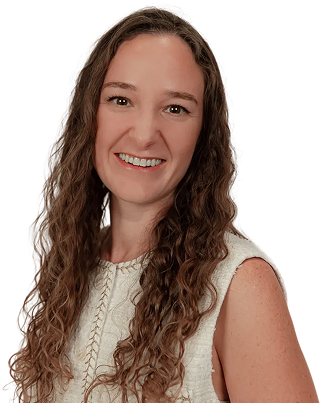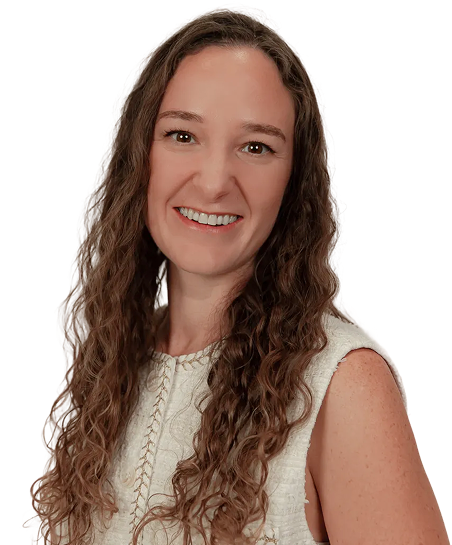
 When someone passes away in Florida, who inherits and how much depends on Florida law, the will (or its absence), and protections written into the state’s homestead and elective-share rules. Allie Castellano helps Sarasota families understand the distribution process at the 12th Judicial Circuit.
Distribution looks different depending on whether someone died with a valid will or without one. If a properly executed will exists, that document usually controls who receives the probate estate, subject to Florida protections for surviving spouses and children discussed below. If there is no will, Florida Statutes Chapter 732 supplies the default distribution rules.
Either way, the probate court oversees the process. For Sarasota residents, probate matters are handled through the 12th Judicial Circuit Probate Division at the Silvertooth Judicial Center.
he issue is common for a reason. Florida had more than 141,000 circuit probate filings in fiscal year 2024–25, and Sarasota County has a large 65+ population. Yet nationally, only about 24% of adults reported having a will in 2025. That gap is why families so often end up asking the probate court who inherits and what happens next.
Already in a dispute? If you are contesting a will or facing a claim of undue influence, see our Inheritance Disputes page.
How Florida Decides Who Inherits Without a Will
When someone dies in Florida without a valid will (the legal term is intestate ), Fla. Stat. § § 732.102 and 732.103 govern distribution. The estate does not pass to the state, and there is no judicial discretion about who inherits. The statute lays out priorities in a fixed order, and the surviving family’s situation determines the math.
he four most common scenarios in Sarasota practice:
- Surviving spouse, all children are children of the surviving spouse. The surviving spouse takes the entire estate (§732.102(1)).
- Surviving spouse plus children of the decedent who are not children of the surviving spouse. The surviving spouse takes one-half; the other half passes per stirpes to the decedent’s descendants (§732.102(2)). This is the blended-family scenario, and it is the single most common reason a Sarasota inheritance does not go the way a family expected.
- No surviving spouse, surviving descendants. The entire estate passes per stirpes to the decedent’s descendants (§732.103(1)).
- No surviving spouse, no descendants. The estate passes to the decedent’s parents, then to siblings, and then to more remote relatives, in the sequence the statute spells out, section by section (§732.103(2)–(8)).
Per stirpes is Florida’s default rule of representation. When a child of the decedent has predeceased, that child’s share passes to the predeceased child’s own descendants rather than being redistributed among the surviving children of the decedent.
If someone dies without a will, Florida law decides who inherits. The family does not get to choose the distribution at that point. A probate lawyer can help confirm who has the right to inherit, what the court will need, and how long the process may take.
How a Will Changes the Distribution
When a Florida resident dies with a valid will, the will usually controls who receives the probate estate. That control is still subject to certain Florida protections, including rights that may apply to a surviving spouse or minor children.
Florida has strict signing rules. Under Fla. Stat. § 732.502, the will must be signed by the person making it, and two witnesses must sign in the person’s presence and in each other’s presence.
Most Florida wills distribute property in a few ways:
- Specific gifts: named items or amounts left to specific people or organizations, such as jewelry, a set dollar amount, or a piece of real estate.
- Residuary clause: the remaining estate after debts, expenses, and specific gifts are handled. This is often where most assets pass.
- Per stirpes or per capita language: instructions for what happens if a beneficiary dies first. Per stirpes follows the family line. Per capita divides among the surviving beneficiaries in the named group.
A will also name a personal representative , which is Florida’s term for an executor. This person handles probate from gathering assets, notifying creditors, paying valid claims, filing required tax documents, and distributing the estate as directed by the will.
If the original will is missing, damaged, unclear, or challenged, the court may need to resolve the issue before distributing assets. A valid Florida will be prepared and stored with appropriate care to prevent most of these delays.
The Spousal Rights That Can Override a Will
A Florida will does not have the final word on every asset. Surviving spouses have rights that can override what the will says, especially when the estate includes a marital home or when the will leaves the spouse less than Florida law allows.
wo rules that matter most are:
The elective share
Under Fla. Stat. § 732.2055 , a surviving spouse may choose the elective share instead of accepting what the will provides. The elective share is 30% of the elective estate .
hat estate is broader than the probate estate. It may include probate assets, revocable trust assets, survivorship interests in certain accounts, and other non-probate transfers covered by the statute.
In simple terms:
Elective Share = 30% of the elective estate
he spouse must make the election within the deadline set by Florida law. If the spouse does not file the election on time, the spouse will generally control.
Homestead descent
Florida homestead rules are separate from ordinary will distribution. Under Fla. Stat. § 732.401 and Article X, Section 4 of the Florida Constitution , a homestead may not be freely left to anyone the owner chooses if the owner is survived by a spouse or minor child.
If there is a surviving spouse and no minor child, the homestead may be left to the spouse. If the owner leaves a spouse and descendants, Florida law may give the spouse a life estate with the remainder to descendants, unless the spouse elects a one-half tenancy-in-common interest.
For families dealing with the practical mechanics of an elective share or a homestead descent question, an experienced Florida probate lawyer can analyze the elective-estate calculation and file the appropriate elections within the statutory deadline.
When Distribution Skips Heirs by Mistake
Florida law has special rules for family members who enter the picture after a will is signed.
A pretermitted spouse is a spouse who married the decedent after the will was executed and was not provided for in the will. Under Fla. Stat. § 732.301 , that spouse may receive the share they would have received if there had been no will, unless the will clearly planned for the future marriage or the spouse was provided for in another way.
A pretermitted child is a child born or adopted after the will was signed and not mentioned or provided for. Under Fla. Stat. § 732.302 , that child may also receive an intestate share, unless the omission appears intentional, the estate was mostly left to the child’s other parent, or the child was provided for outside the will.
he practical issue is that an outdated will can result in a distribution that the family did not expect. A later marriage, birth, or adoption should trigger a will review before Florida’s default rules fill the gap.
Distribution at the 12th Judicial Circuit (Sarasota County Probate)
Probate filings for Sarasota County residents go to the 12th Judicial Circuit Probate Division , which sits at the Silvertooth Judicial Center in downtown Sarasota. Filings made at the Venice satellite location (R.L. Anderson Center) are transferred to Sarasota for further proceedings under Administrative Order 2007-8.2.
A few practical points local families should know:
- Timeline. Even a simple Florida probate can take 5 to 6 months . The creditor-claim period under Fla. Stat. §733.701 is three months from publication, and the personal representative must complete inventory, claim resolution, and distribution thereafter (per he Florida Bar’s consumer pamphlet on probate ).
- Summary administration. If the estate (less property exempt from creditors’ claims) does not exceed $75,000 , or the decedent has been deceased for more than two years, summary administration is available under Fla. Stat. §735.201. Summary administration moves faster, costs less, and is the default route for many Sarasota families when the threshold is met.
- Personal representative requirements. Florida law generally restricts who may serve as a personal representative under Fla. Stat. §733.302 to Florida residents or close family members. Out-of-state friends or named beneficiaries may not qualify, which is a frequent surprise to snowbird clients.
Quick check: Is the probate estate under $75,000 in non-exempt assets? Summary administration is likely available.
he procedural baseline matters because distribution does not happen until probate is open, the personal representative is appointed, creditors are notified, and the court approves the probate process .
Special Florida Distribution Situations
A handful of distribution situations appear often enough in Sarasota practice to warrant their own discussion.
Snowbirds and out-of-state assets
Many Sarasota families maintain a primary or secondary residence in another state. Real property is governed by the law of the state where the property sits, not by Florida’s intestacy rules, so estates with out-of-state real estate frequently require ancillary probate in the other jurisdiction.
Funding a revocable living trust with the out-of-state property avoids the duplicate proceeding and is the most common solution for dual-residency clients.
Hurricane-damaged or lost wills
After Hurricanes Ian, Helene, and Milton, several Sarasota-area clients have asked what happens when an original signed will is damaged or destroyed before death.
Florida allows a will to be admitted to probate by lost-will proof under Fla. Stat. §733.207, but the proponent must establish the will’s contents by a copy or by sworn testimony, and a will last seen in the possession of the testator is presumed revoked unless that presumption is rebutted.
he practical takeaway: the original belongs in a fire- and water-resistant location, with a backup digital copy held by the drafting attorney.
Pet trusts
Florida recognizes pet trusts under Fla. Stat. §736.0408. A pet trust may name a caregiver, a trustee, and a remainder beneficiary for funds left over after the last surviving pet has died. A court may reduce the trust corpus if it substantially exceeds what is needed for the animals’ care.
Digital assets
Email, cloud storage, social media, and cryptocurrency wallets are governed by Florida’s Fiduciary Access to Digital Assets Act (Fla. Stat. Chapter 740).
he personal representative’s access depends on whether the platform offers an online tool (such as Google Inactive Account Manager or Apple Legacy Contact), a will provision authorizing access, or a court order under §740.04.
How Allie Castellano Helps Sarasota Families Through Inheritance Distribution
Allie Castellano leads the firm’s estate planning and probate practice. She works with Sarasota families on the full distribution process, from the first probate filing through final discharge.
A few things her clients tend to value:
- Clear explanations. Florida intestacy, elective-share calculations, and homestead descent are not topics families want to learn in a hurry. Allie walks through them in plain language and writes down the relevant statute so the family has a reference.
- Responsive communication. Probate is a months-long process with periodic court deadlines. Allie’s clients hear from her regularly, not only when there is something to sign.
- Familiarity with the 12th Circuit. Local procedures, Sarasota County filing practices, and timing differences between summary and formal administration affect how quickly distribution occurs.
- Flat-fee consultations. The first consultation is free, and ongoing work is priced on a flat-fee basis where the matter is well-defined.
Frequently Asked Questions About Inheritance Distribution in Sarasota
Does my surviving spouse inherit everything in Florida if I die without a will?
In Florida, the surviving spouse inherits the entire intestate estate only if all of the decedent’s descendants are also descendants of the surviving spouse and the spouse has no other descendants (Fla. Stat. §732.102(1)). If the decedent has children from a prior relationship, the calculation changes.
What does my spouse get if I have kids from a previous marriage in Florida?
Under Fla. Stat. §732.102(2), if you die intestate and you have descendants who are not also descendants of your surviving spouse, the surviving spouse takes one-half of the estate and the other half passes per stirpes to your descendants. This is the most common blended-family intestacy outcome in Florida.
What is the Florida elective share, and how is the 30% “augmented estate” calculated?
he Florida elective share (Fla. Stat. §732.2055) gives a surviving spouse the option to claim 30% of the elective estate , a defined statutory pool that includes the probate estate plus certain non-probate transfers (revocable-trust assets, joint accounts, and others). The surviving spouse must affirmatively elect within statutory deadlines.
What happens to a Florida homestead when one spouse dies?
Under Fla. Stat. §732.401, if the decedent is survived by a spouse and lineal descendants, the surviving spouse takes a life estate in the homestead with the descendants taking the remainder per stirpes. The surviving spouse may instead elect a one-half tenancy-in-common interest, with the descendants taking the other half.
Can I leave my Florida homestead to someone other than my spouse or minor child in my will?
No, not while a spouse or minor child survives. Article X §4 of the Florida Constitution and Fla. Stat. §732.401 restricts homestead devise. A will provision attempting to leave the homestead to anyone else is void as to the homestead, and the homestead passes under the constitutional and statutory descent rules instead.
What is a “pretermitted spouse” or pretermitted child under Florida Statute §732.301?
A pretermitted spouse is a person who marries the decedent after the decedent’s will is executed and is not provided for in the will (Fla. Stat. §732.301). A pretermitted child (Fla. Stat. §732.302) is a child born or adopted after the will is executed and similarly omitted. Both take an intestate share unless statutory exceptions apply.
If you are dealing with a recent death in the family, an out-of-date will, or a question about how Florida law would distribute your own estate, Buckman, Buckman & Castellano, P.A. helps Sarasota-area families with the practical mechanics of inheritance distribution.
Allie Castellano serves clients across Sarasota, Venice, Bradenton, North Port, and surrounding communities. To schedule a free consultation, please contact our office .