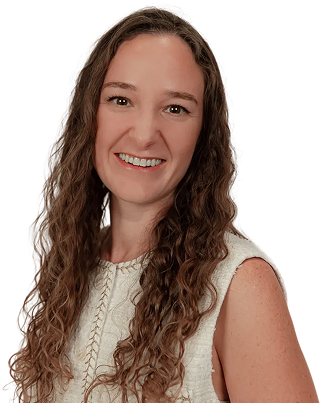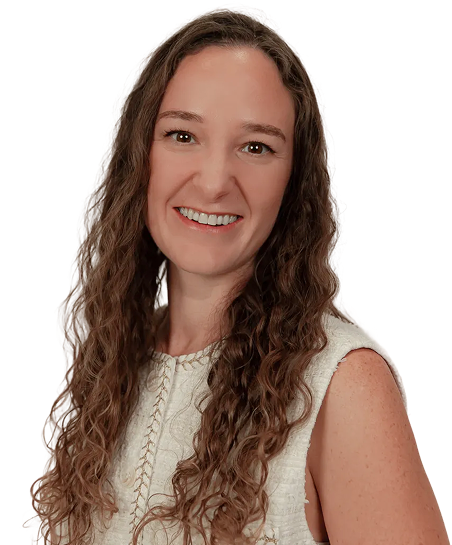
 Florida Medicaid pays for long-term nursing-home care for applicants who meet strict asset, income, and look-back rules. Allie Castellano helps Sarasota families plan and respond when nursing-home admission is days, not months, away.
In Sarasota County, long-term care planning is not a distant concern. Roughly 38% of residents are age 65 or older, and Florida nursing-home costs often run between $9,000 and $12,000 per month.
Many families assume Medicare will cover long-term nursing-home care. It generally does not. Medicare may cover limited skilled-nursing rehabilitation, but it does not pay for ongoing custodial care.
Florida Medicaid can cover nursing home care through the Institutional Care Program (ICP), but the applicant must meet the program’s medical and financial eligibility requirements. Those rules include income limits, asset limits, transfer reviews, spousal protections, and documentation requirements.
Medicaid planning is not fraud. Federal law under 42 U.S.C. § 1396p and Florida regulations, including Fla. Admin. Code r. 65A-1.7141 allows lawful planning strategies when properly timed and documented.
The difference between a carefully planned transfer and a rushed one can be significant. A wrong move may cost the family months of eligibility and substantial private-pay nursing-home costs.
Florida Medicaid ICP. Eligibility Mechanics
Florida’s Institutional Care Program Medicaid has three basic eligibility areas: medical need, income, and assets. The numbers below reflect 2025 figures with 2026 updates noted. Before filing, the current Florida DCF ESS policy should be checked.
Asset limit
- Applicant: $2,000 in countable assets
- Community spouse (CSRA): up to $157,920 maximum (2025–2026)
Income cap
- 2025: $2,901 per month (300% of the federal benefit rate)
- 2026: approximately $2,982 per month, reflecting the 2.8% Social Security cost-of-living adjustment
Florida is an income-cap state; applicants whose income exceeds the cap are not automatically disqualified, but must use a Qualified Income Trust (QIT, also called a Miller Trust) to direct excess income into a properly-structured account that the State of Florida inherits at the applicant’s death.
Spousal protections
When one spouse needs nursing home care, and the other remains at home, Florida Medicaid rules provide certain protections for the community spouse.
Key protections include:
- CSRA: up to $157,920 maximum for 2025–2026
- Minimum Monthly Maintenance Needs Allowance: $2,644 per month from 7/1/2025 through 6/30/2026
- Maximum MMMNA: $3,948 per month
- protection for the homestead, one vehicle, household goods, and certain exempt assets in addition to the CSRA
Exempt assets
Several categories of assets are not counted against the $2,000 limit: the homestead (subject to a federal equity cap), one vehicle, household goods and personal effects, certain prepaid burial arrangements, term life insurance with no cash value, and qualified retirement accounts in payout status (in many cases).
The 60-Month Look-Back and Penalty Divisor
Florida Medicaid reviews transfers made during the 60 months before the application. This is the Medicaid look-back period under 42 U.S.C. § 1396p(c)(1)(B)(i) and Fla. Admin. Code r. 65A-1.7141.
If an applicant gave away assets or sold them for less than fair market value during that period, Medicaid may impose a penalty period.
The calculation is based on the statewide penalty divisor:
Penalty months = value of disqualifying transfer ÷ penalty divisor
As of April 2025, Florida’s penalty divisor is approximately $10,645 per month. That means each $10,645 in disqualifying transfers results in about 1 month of ICP ineligibility.
Example: If a parent gives $50,000 to a child during the look-back period, the penalty is approximately:
$50,000 ÷ $10,645 = 4.7 months of ineligibility
The penalty begins when the applicant is otherwise eligible: medically qualified, financially eligible apart from the transfer penalty, and in a nursing facility.
The divisor changes periodically. Before relying on a calculation, the current AHCA-published rate should be confirmed.
Compliant Medicaid Planning Strategies
A properly-structured plan can preserve substantial family assets while still qualifying for ICP. Several legal strategies, each with strict requirements:
Caregiver child exemption (42 U.S.C. §1396p(c)(2)(A)(iv))
Federal law allows a limited exemption for transferring a primary residence to an adult child under 42 U.S.C. § 1396p(c)(2)(A)(iv). The adult child must have lived with the applicant for at least 2 years immediately before institutionalization and have provided care that enabled the applicant to remain at home.
This exemption is documentation-heavy. The agency may review medical records, proof of residence, caregiving history, and evidence that the care delayed nursing-home placement.
Medicaid Asset Protection Trust (MAPT)
A Medicaid Asset Protection Trust, or MAPT, is an irrevocable trust used in pre-need planning.
The applicant transfers assets into the trust and gives up control over the principal. If the trust is properly drafted and funded outside the 60-month look-back period, the assets may be treated as non-countable resources for the applicant.
A MAPT does not work as a last-minute fix. Funding the trust during the look-back period can trigger a penalty, just as an outright gift would.
Spousal refusal
A community spouse may legally refuse to make resources available for the institutionalized spouse’s care. The state may seek reimbursement from the refusing spouse, but the institutionalized spouse becomes eligible only based on their own assets.
Spousal refusal is a powerful tool, but it produces a state lien claim that requires careful management.
Qualified annuities
A properly structured annuity may convert countable assets into income for the community spouse.
For the annuity to work, it must meet strict requirements. It generally must be irrevocable, non-assignable, actuarially sound, and name Florida Medicaid as a remainder beneficiary where required.
Used incorrectly, an annuity can create eligibility problems rather than provide protection.
Irrevocable burial trusts
Florida Medicaid allows certain funeral and burial funds to be treated as exempt when properly structured.
This is usually a smaller planning tool, but it can still reduce countable assets while setting aside money for final expenses.
What does not work
Common failed strategies: revocable trusts (counted as the applicant’s resources); informal “house transfer with mom keeping the keys” arrangements (still countable as the applicant’s resources); below-market sales to family without proper documentation (treated as gifts); same-day asset reduction before application (caught by look-back).
VA Aid & Attendance Coordination
Some Sarasota families need to coordinate Medicaid with VA Aid & Attendance benefits.
The VA has a 36-month look-back period under 38 CFR § 3.276, while Medicaid has a 60-month look-back. A transfer strategy that works for VA purposes may still create a Medicaid penalty.
Once a single nursing home VA recipient becomes Medicaid-eligible, federal law may cap the VA pension portion at $90 per month under 38 U.S.C. § 5503. The enhanced Aid & Attendance portion is excluded from the Medicaid income calculation, but the base pension is counted.
Different rules may apply for married veterans and surviving spouses.
The practical point is that VA and Medicaid planning must be reviewed together. Families should not make gifts or transfers for one program without checking the effect on the other.
For comprehensive Sarasota veterans-benefits work, see our Veterans Benefits & Estate Planning page.
Common Mistakes That Disqualify Florida Medicaid Applicants
Several patterns recur in Sarasota practice:
- Misunderstanding the IRS $19,000 annual gift exclusion. The IRS rule is a federal tax rule with no Medicaid implications. A $19,000 gift to a child within the 60-month look-back period is a fully disqualifying transfer for Medicaid, regardless of federal gift tax treatment.
- Adding a child as a joint owner on a bank account. Treated as a gift of half the account to the child for Medicaid purposes; it counts against the look-back.
- Below-market sale of the home or vehicle to a family member. Treated as a gift of the difference between the sale price and the fair market value.
- Informal house transfer with the parent retaining occupancy. If the parent retains rights or control, the transfer may not effectively remove the asset from the parent’s control.
- Failure to time MAPT funding correctly. Transfers into an irrevocable trust within the 60-month look-back trigger the same penalty as outright gifts.
- Discharging legitimate debts after planning starts. Acceptable, but documentation is critical; undocumented payments can be reclassified as transfers.
- Spousal refusal without proper notice. State reimbursement claims can follow if the procedure is mishandled.
The Sarasota Application Process
Florida Medicaid applications are processed through the Florida Department of Children and Families ACCESS portal. The Florida Agency for Health Care Administration administers the Statewide Medicaid Managed Care Long-Term Care program through which ICP services are delivered.
The application usually requires detailed documentation, including:
- 60 months of bank statements
- deeds
- vehicle titles
- retirement account statements
- life insurance policies
- marriage certificates
- identification
- DD-214 forms for veterans
- records showing transfers, payments, or asset changes
Straightforward applications may take 45 to 90 days. Cases involving look-back issues, missing records, disputed transfers, or appeals may take six months or longer.
Denials can be appealed through DCF and, if needed, through an administrative hearing. The fastest applications are usually those with complete records from the start.
How Allie Castellano Helps
Allie Castellano leads the firm’s estate planning and elder law practice as the firm’s Sarasota Medicaid Planning Lawyer, working with families across the full spectrum of Medicaid-planning matters:
- Pre-need planning (5+ years before any anticipated nursing-home need).
- Crisis planning (less than 60 months out, often days from admission).
- MAPT design, funding, and trustee selection.
- Caregiver child exemption documentation and transfer.
- VA + Medicaid coordinated planning.
- Application preparation and DCF/AHCA representation.
- Appeal of denials through DCF and administrative hearing.
- Coordinated asset protection and special-needs trust services.
The first consultation is free. Ongoing work is priced on a flat-fee basis where the matter is well-defined.
Frequently Asked Questions About Sarasota Medicaid Planning
How does Florida’s 5-year Medicaid look-back work?
Florida Medicaid reviews any asset transfers made within the 60 months before the application for fair-market-value consideration. Transfers for less than fair value trigger a penalty period: each $10,645 transferred (the 2025 divisor) equals one month of ICP ineligibility, starting on the date the applicant would otherwise qualify.
Will gifting $19,000 a year to my kids trigger a Medicaid penalty?
Yes. The IRS’s $19,000 annual gift exclusion is a federal tax rule with no Medicaid implications. Any gift within the 60-month look-back is a fully disqualifying transfer for Medicaid purposes, regardless of how the IRS treats it.
Can I transfer my house to my child who lived with me as a caregiver without a Medicaid penalty?
Sometimes, under the caregiver child exemption (42 U.S.C. §1396p(c)(2)(A)(iv)). The child must have lived with you for at least two years immediately preceding institutionalization and provided care that allowed you to remain at home. Documentation is critical; the agency will scrutinize the claim.
What’s the difference between a Medicaid Asset Protection Trust and a regular revocable trust?
A revocable trust does not protect assets from Medicaid; the assets are still counted as the grantor’s resources. A Medicaid Asset Protection Trust (MAPT) is irrevocable: the grantor permanently gives up control over the principal in exchange for the trust assets being treated as outside the countable estate after the 60-month look-back has run.
Can my dad receive both VA Aid & Attendance and Florida Medicaid?
In some configurations, yes. The VA pension is reduced to $90 per month for a single nursing-home Medicaid recipient under 38 U.S.C. §5503. The enhanced A&A portion is excluded from Medicaid’s income calculation, but the base pension is counted. Married veterans and surviving spouses face different rules, and the planning is technical, with the VA’s 36-month look-back also required.
How long does Florida Medicaid eligibility approval take?
Straightforward applications run 45 to 90 days through the DCF ACCESS portal. Cases involving look-back analysis, asset disputes, or appeals can run six months or longer. Filing complete documentation at submission is the single biggest determinant of approval speed.
If your family is facing a long-term care diagnosis, planning for one, or coordinating Medicaid with VA benefits, the team at Buckman, Buckman & Castellano, P.A. can help.
As your Sarasota Medicaid Planning Lawyer, Allie Castellano serves clients across Sarasota, Venice, Bradenton, North Port, and surrounding communities. To schedule a free consultation, please contact our office.
This content is for informational purposes only and does not constitute legal advice. Past results in any legal matter depend on the specific facts of that matter and do not guarantee or predict future outcomes. Testimonials, where used, reflect individual client experiences; your results may differ. Reading this page or contacting our office does not create an attorney-client relationship; an attorney-client relationship is formed only after a written engagement agreement is signed by both you and the firm.