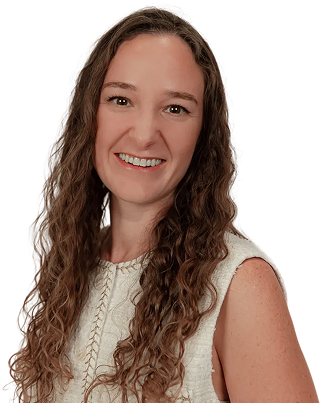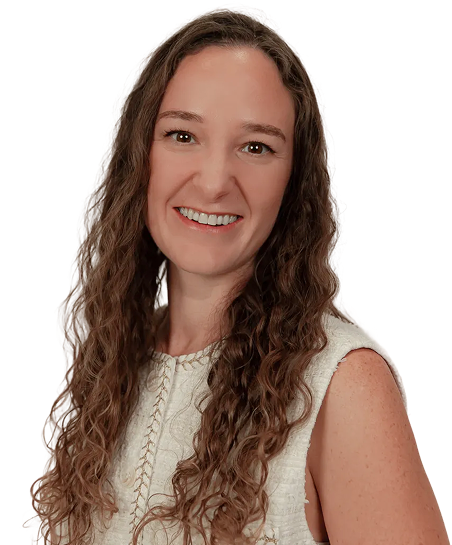
 Sarasota has one of the largest veteran populations in Florida, but VA benefits, Medicaid eligibility, and long-term care planning do not always work together automatically. Allie Castellano helps veteran families structure plans that protect benefits while preparing for future care needs.
Sarasota County reports 42,041 veterans, equal to about 8.8% of the county’s civilian adult population. That is higher than Florida’s statewide veteran share of 7.4%. The North Port–Bradenton–Sarasota MSA share is even higher at 13.7%.
Many local veterans are Vietnam-era veterans, which means long-term care planning, survivor planning, and benefit coordination are becoming more urgent for Sarasota families.
Florida also has 1,395,602 veterans as of fiscal year 2024, the third-highest number of any state.
For veteran families, the legal issue is often coordination. VA Aid & Attendance has one set of rules. Florida Medicaid has another. Estate planning documents have to work with both.
A transfer that helps with one program can create a penalty under the other. That is why VA, Medicaid, and estate planning should be reviewed together before assets are moved.
VA Pension and Aid & Attendance Eligibility
The VA’s needs-based pension program for wartime veterans has three benefit levels: Basic Pension, Housebound, and Aid & Attendance (A&A), the highest level, paid to veterans who require assistance with daily living activities or are nursing-home residents.
Service eligibility:
- 90 days of active military service with at least one day during a designated wartime period (WWII, Korea, Vietnam, Gulf War, etc.)
- Discharge other than dishonorable
Financial eligibility:
- Net worth limit: $159,240 in 2025; $163,699 in 2026 (effective Dec 1, 2025, with the 2.8% COLA).
- “Net worth” combines countable assets and annualized income, a calculation that is not the same as Medicaid’s asset-only test.
- Primary residence and one vehicle are excluded from net worth.
Medical eligibility for A&A:
- The veteran requires the regular aid and attendance of another person for activities of daily living (bathing, dressing, eating, medication management), OR
- The veteran is bedridden, OR
- The veteran is a patient in a nursing home, OR
- The veteran has corrected vision of 5/200 or less in both eyes, or has concentric visual contraction of 5 degrees or less.
The VA has its own application and adjudication process; approvals typically take 6 to 12 months. Backdated benefits typically run from the application date.
Aid & Attendance Benefit Amounts
A&A pays a maximum monthly benefit reduced by countable income (the “income for VA purposes” or IVAP calculation, after unreimbursed medical expenses).
2025 maximum annual rates (effective Dec 1, 2024–Nov 30, 2025):
| Recipient category | Max annual | Max monthly |
| Single veteran with A&A | $28,300 | $2,358 |
| Veteran + 1 dependent with A&A | $33,548 | $2,795 |
| Two married veterans both with A&A | $44,886 | $3,740 |
| Surviving spouse with A&A (no dependents) | $18,187 | $1,515 |
2026 rates apply to the 2.8% Social Security COLA (Dec 1, 2025–Nov 30, 2026). Verify exact figures against VA.gov before any client communication.
The benefit is reduced dollar-for-dollar by countable income above the VA’s pension threshold, but unreimbursed medical expenses (UMEs), including assisted living and nursing-home costs, are deductible from countable income, typically reducing IVAP to zero for nursing-home residents and producing the maximum benefit.
The VA 36-Month Look-Back vs. Florida Medicaid 60-Month Look-Back
This is one of the most important planning issues for veteran families.
The VA has a 36-month look-back period under 38 CFR § 3.276, effective October 18, 2018. Transfers during that period may create a VA pension penalty.
Florida Medicaid has a separate 60-month look-back period under 42 U.S.C. § 1396p(c)(1)(B)(i) and Fla. Admin. Code r. 65A-1.7141.
Those windows are not the same. A transfer that clears the VA’s 36-month period may still create a Medicaid penalty if it falls inside Medicaid’s 60-month review.
For planning purposes:
- If the family expects to need only VA benefits, the 36-month window matters.
- If Medicaid may also be needed, the 60-month Medicaid window usually controls.
- If both programs may apply, gifts and transfers must be reviewed under both systems.
This is why earlier planning matters. A family that waits until care is already needed may have fewer options. For comprehensive Florida Medicaid Planning coordination, see our dedicated page.
DIC and Survivor Pension for Surviving Spouses
Two separate programs serve surviving spouses of qualifying veterans:
- Dependency and Indemnity Compensation (DIC) under 38 U.S.C. §1310, paid to the surviving spouse of a veteran who died from a service-connected condition or was rated 100% disabled for at least 10 years before death. DIC is not needs-based; the 2025 base rate is approximately $1,653.97/month for a surviving spouse, with additional amounts for dependents.
- Survivors’ Pension (formerly Death Pension), needs-based, structured similarly to the veteran’s pension. Surviving spouses of wartime veterans may qualify if they meet income and net-worth tests. Maximum 2025 A&A rate for surviving spouse: $18,187/year ($1,515/month).
The two programs are mutually exclusive; a surviving spouse receives DIC if eligible (typically higher), or Survivors’ Pension if not eligible for DIC.
SBP (Survivor Benefit Plan) coordination: Military retirees may have purchased SBP coverage during service. SBP payments to a surviving spouse are countable income for VA Survivors’ Pension purposes but do not affect DIC. The interaction matters for surviving spouses with both SBP and a potential Survivors’ Pension claim.
Estate Planning Coordination for Veteran Families
Several estate-planning structures interact with VA and Medicaid eligibility for Sarasota veteran families:
- A Revocable Living Trust does not protect assets from VA or Medicaid eligibility tests during life. Useful for probate avoidance but neutral on benefits eligibility.
- Lady Bird Deed. Florida-specific homestead transfer mechanism. Preserves Florida homestead exemption and Save Our Homes cap. Treatment for VA net-worth purposes follows the same logic as Medicaid (the homestead is excluded from countable assets).
- Medicaid Asset Protection Trust (MAPT), properly drafted and timed (60+ months before any application), protects assets from Medicaid countable resources after the look-back. Also satisfies the VA 36-month window.
- Spousal protections, the elective share under Fla. Stat. §732.2055, and homestead descent under §732.401 apply to veteran families the same as any Florida family.
- VA Guaranteed Mortgages, the VA loan benefit is a separate lifetime entitlement that does not affect estate-planning structure.
For Sarasota veterans with significant non-homestead assets, the Medicaid Asset Protection Trust is often the most effective single tool; it protects assets from both the VA pensions’ net-worth test and Medicaid’s asset test, provided the timing is met.
How Allie Castellano Helps Sarasota Veterans
Allie Castellano leads the firm’s estate planning and elder-law practice and works with Sarasota veteran families on coordinated VA + Medicaid planning:
- VA Aid & Attendance application preparation and supporting documentation
- Coordinated 36-month + 60-month gifting strategy
- MAPT design for veteran families
- DIC and Survivors’ Pension claim guidance for surviving spouses
- Estate-plan integration with VA + Medicaid + Florida estate-tax work
- Coordination with Sarasota County Veterans Service Officer (VSO), where appropriate
The first consultation is free. Note: Florida law restricts who may charge fees for VA-claim preparation; the firm’s fee structure complies with the applicable rules and is discussed at the initial consultation.
Frequently Asked Questions
Can my dad receive both VA Aid & Attendance and Florida Medicaid?
In some cases, yes. Once a single nursing-home VA recipient is approved for Medicaid, federal law may cap the VA pension portion at $90 per month under 38 U.S.C. § 5503. Married veterans and surviving spouses have different rules.
Does the VA’s 36-month look-back use the same gift rules as Medicaid?
No. Both programs penalize certain uncompensated transfers, but the look-back periods are different. VA uses 36 months. Florida Medicaid uses 60 months. A transfer that works for VA may still create a Medicaid penalty.
What’s the difference between DIC and a VA survivor pension?
DIC is a service-connected death benefit and is not needs-based. Survivors’ Pension is needs-based and may apply to surviving spouses of wartime veterans who do not qualify for DIC. The two benefits are mutually exclusive.
Will my SBP (Survivor Benefit Plan) affect my widow’s eligibility for Aid & Attendance?
Yes for Survivors Pension; no for DIC. SBP payments to a surviving spouse are countable income for VA Survivors Pension purposes; high SBP payments may reduce or eliminate eligibility for the Survivors Pension. SBP does not affect DIC eligibility or amount, since DIC is not needs-based.
If you are a Sarasota veteran, surviving spouse, or family member coordinating VA benefits with estate and long-term care planning, Buckman, Buckman & Castellano, P.A. can help. Allie Castellano serves clients across Sarasota, Venice, Bradenton, North Port, and surrounding communities. To schedule a free consultation, please contact our office.