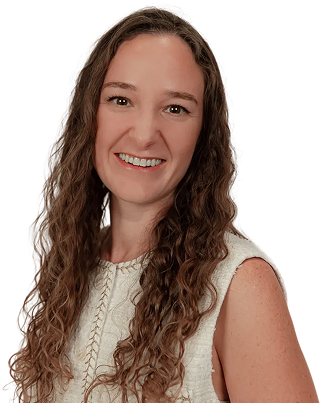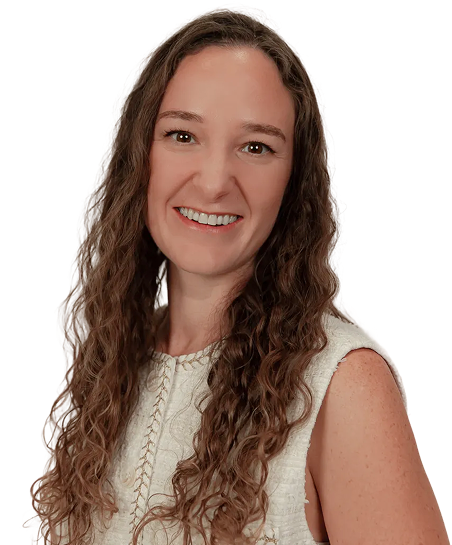
 Alisha Buckman and Allie Castellano help Sarasota business owners create succession plans for ownership transfers, retirement, incapacity, and partner disputes. Protect the business before an unexpected transition disrupts operations or ownership.
Sarasota has a large number of family-owned and closely held businesses, including marine and yachting companies, hospitality businesses, construction firms, professional practices, and specialty retailers.
Many owners want the business to stay in the family. The problem is that the paperwork often does not match that goal. PwC’s 2023 Global Family Business Survey found that 72% of family business owners want the business to remain in the family, yet only 34% have a well-documented succession plan.
That gap matters. Once an owner dies, becomes disabled, divorces, retires, or wants out, the family and surviving owners may be forced to negotiate under pressure. At that point, valuation, control, funding, tax, and inheritance issues can collide at the worst possible time.
A succession plan gives the business a path before the event happens.
Why Most Family Businesses Don’t Survive a Generation Transition
The 30/12/3 generational survival statistic is widely cited (30% to the second generation, 12% to the third, and 3% to the fourth). The figure has been methodologically critiqued in family-business research, but the underlying point holds: family-business continuity across generations is the exception, not the rule.
The reasons are usually procedural, not substantive:
- No written buy-sell agreement between owners. When one partner dies, divorces, becomes disabled, or wants to exit, the survivors are negotiating from scratch under pressure.
- Insufficient or absent funding for buy-out events, even with a buy-sell, the cash to execute it isn’t reliably there.
- The operating agreement is silent on transfer-on-death; interests pass through probate to heirs that the surviving owners may not want as partners.
- No coordinated estate-planning side, the deceased partner’s estate plan and the company’s succession plan don’t align, creating tax, valuation, or litigation surprises.
- Valuation methodology not pre-agreed, disputes over what the business is worth dominate post-event negotiations.
Sarasota’s population of family business owners is also aging quickly. Sarasota County is roughly 38% senior, well above the national average, which compresses the planning window.
The Core Building Blocks of a Florida Succession Plan
A complete Sarasota succession plan typically includes these elements:
- Buy-Sell Agreement. Defines what happens to ownership interests on triggering events (death, disability, retirement, divorce, deadlock, bankruptcy). Specifies pricing methodology and funding source.
- Operating Agreement / Shareholder Agreement Transfer Provisions. For Florida LLCs (Fla. Stat. Ch. 605) and corporations, the operating or shareholder agreement governs interest transfers in the absence of a buy-sell. Default Florida statutory provisions are usually not what the parties actually want.
- Key-Person Insurance. Life insurance on key owners or executives, owned and beneficiary-designated to fund buy-out obligations.
- S-Corp QSST/ESBT Qualification (where relevant). S-corporations have strict rules about who may own stock; trusts that hold S-corp shares must qualify as Qualified Subchapter S Trusts (QSSTs) or Electing Small Business Trusts (ESBTs) under IRC §1361.
- Valuation Methodology. Pre-agreed approach, book value, multiple of earnings, formula, third-party appraiser, that controls dispute risk.
- Coordinated Estate Plan. Each owner’s individual estate plan must funnel ownership interests through the buy-sell or planned successors, not through generic residuary clauses.
- IRC §6166 planning for businesses where federal estate tax may apply (still relevant for closely-held businesses above the new $15M exemption).
Buy-Sell Agreements. Triggers and Funding
The buy-sell is the central document. Key design choices:
Trigger events
A standard Florida buy-sell defines what happens when:
- Death, surviving owners (or the entity) buy out the deceased’s interest.
- Permanent disability, incapacity beyond a defined waiting period, triggers buy-out.
- Voluntary departure / retirement, typically with a discounted formula or right of first refusal.
- Divorce protects against ex-spouses becoming co-owners.
- Bankruptcy or insolvency.
- In two-owner companies, a deadlock is a structured buyout option when partners cannot agree.
Cross-purchase vs. entity-purchase
- In a cross-purchase, the surviving owners individually buy the departing owner’s interest. Good for two-owner companies; tax-favorable basis step-up; insurance gets complicated with more than 2-3 owners.
- An entity purchase, the company itself buys the departing owner’s interest. Simpler administratively; one insurance policy per owner; no individual basis adjustment for the survivors.
- Hybrid/ wait-and-see combines features; popular for mid-size partnerships.
Funding
A buy-sell without funding is a notional agreement, not a workable plan. Common funding sources:
- Life insurance on each owner is the most common, tax-favorable, and predictable source of cash.
- Disability insurance for buy-out triggers tied to incapacity.
- Sinking fund built up from operating cash flow, slower but viable.
- Installment notes with secured collateral are common when neither insurance nor sinking fund is sufficient.
The buy-sell should specify which funding source applies to which trigger and what happens if funding is insufficient.
Coordinating Business Succession with Estate Planning
The cross-practice work between Alisha’s business-law practice and Allie’s estate planning practice is where succession planning either holds together or falls apart.
A coordinated plan should address:
- Will or trust language that respects the buy-sell agreement.
- Trust funding that does not violate transfer restrictions.
- Inheritance distribution planning if ownership passes to heirs.
- In Florida, there is an intestacy risk if no estate plan exists.
- Spousal elective share rights under Fla. Stat. § 732.2055.
- Basis planning for business interests at death.
- Treatment of family members who work in the business versus those who do not.
This coordination is especially important in blended families, second marriages, family businesses with non-family co-owners, and companies where only one child is active in daily operations.
Post-OBBBA Succession. Why Tax is a Smaller Share Now
The One Big Beautiful Bill Act, signed on July 4, 2025, made the federal estate tax exemption permanent at $15 million per individual and $30 million per married couple, effective January 1, 2026.
For Sarasota family-business owners, this changes succession planning:
- The federal estate tax affects fewer estates. Under the $15M permanent exemption, far fewer Sarasota family businesses face federal estate-tax exposure on the senior generation’s death.
- Valuation discounts for closely held interests (lack of marketability, lack of control) remain valuable, but now primarily for basis planning and gift-tax efficiency rather than estate-tax minimization.
- Family Limited Partnerships and similar structures still serve creditor-protection and governance purposes even when the tax case is weaker.
- IRC §6166 installment payments of estate tax for closely held businesses remain the relief mechanism for businesses that exceed the exemption.
- Non-tax governance, buy-sell discipline, key-person protection, and family-conflict prevention take up a larger share of the planning work.
For comprehensive Florida Estate Tax Planning under the post-OBBBA framework, see our dedicated page.
How Alisha Buckman & Allie Castellano Help Sarasota Businesses
The firm’s structure is unusually well-suited to succession work because the business-law and estate-planning sides operate together:
- Alisha Buckman leads buy-sell drafting, operating-agreement transfer provisions, key-person insurance structure, S-corp trust qualification, valuation methodology, and the business-law side of the succession plan.
- Allie Castellano leads the estate planning coordination, wills, trusts, beneficiary alignment with the buy-sell, basis planning, and inheritance distribution coordination.
- Together: integrated succession plans that the business and the estate plan both honor
The first consultation is free.
Frequently Asked Questions About Sarasota Succession Planning
What’s the difference between a buy-sell agreement and an operating agreement transfer provision?
An operating agreement transfer provision controls how LLC interests may be transferred. A buy-sell agreement is usually more detailed and addresses specific trigger events, pricing, funding, and buyout procedures.
Should our buy-sell be cross-purchase or entity-purchase?
It depends on the number of owners, tax goals, insurance structure, and administrative needs. Cross-purchase agreements often work well for two or three owners. Entity-purchase agreements are usually simpler when there are more owners.
How does the new $15M federal estate-tax exemption (OBBBA 2025) change Sarasota succession planning?
Fewer Sarasota family businesses will face federal estate tax under the permanent $15M exemption. Planning now often focuses more on governance, buy-sell funding, key-person protection, basis planning, and family-conflict prevention.
Can my buy-sell agreement be funded with insurance the company already owns on key partners?
Often, yes, but the policy must be reviewed. Ownership, beneficiary designations, transfer-for-value issues under IRC § 101(a)(2), and the buy-sell language all need to line up.
If you own a Sarasota family or closely-held business and have not yet completed a succession plan, or if your existing plan is more than five years old and may not reflect the post-2025 OBBBA changes. Buckman, Buckman & Castellano, P.A. can help.
Alisha Buckman and Allie Castellano serve clients across Sarasota, Venice, Bradenton, North Port, and surrounding communities. To schedule a free consultation, please contact our office.